
Cell Line Engineering Service
Comprehensive gene regulation cell line construction services
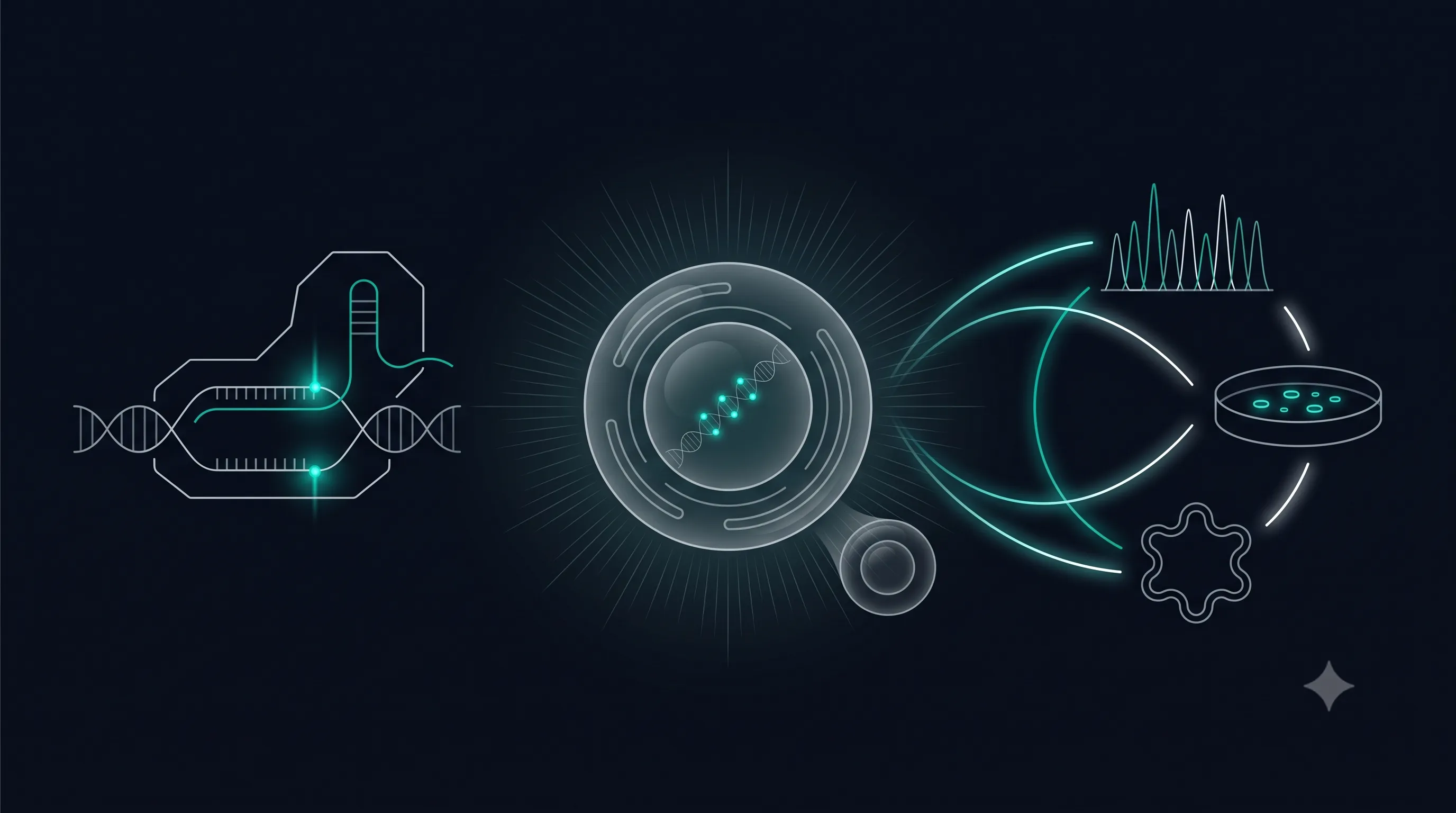
Gene Editing Technologies
The CRISPR/Cas9 system uses guide RNA (sgRNA) to direct the Cas9 nuclease to target specific genomic loci, generating DNA double-strand breaks that are then repaired through cellular DNA repair mechanisms — non-homologous end joining (NHEJ) or homology-directed repair (HDR) — enabling precise editing of target genes. Building upon this foundation, multiple derivative technologies have further expanded the application boundaries of gene editing:
Gene-Edited Cell Lines & Applications
Gene-edited cell lines are fundamental tools for functional genomics research. By introducing predefined genetic modifications into specific cell lines, researchers can dissect gene functions, screen drug targets, construct disease models, and evaluate the feasibility of gene therapy strategies under controlled genetic backgrounds.
- Gene Function Research Systematically dissect gene biological functions in specific cellular contexts, establishing genotype-phenotype causal associations.
- Drug Target Discovery & Validation Construct target validation cell models via gene knockout or regulation, evaluating the biological effects of target intervention.
- Disease Model Construction Introduce pathogenic mutations or key gene modifications to construct cell models for diseases such as cancer and genetic disorders.
- Gene Therapy Strategy Evaluation Evaluate the efficacy of gene editing or gene therapy strategies at the cellular level.
- Synthetic Lethality Target Screening Construct cell lines with specific gene deficiencies, providing experimental systems for synthetic lethality drug screening.
Gene Regulation Types & Technical Services
| Regulation Type | Technical Route | Delivery Standard | Delivery Cycle (Est.) |
|---|---|---|---|
| Gene Knockout (KO) | CRISPR/Cas9 plasmid / lentivirus / RNP transduction | Monoclonal, Sanger sequencing confirmed frameshift / fragment deletion | 8-14 weeks |
| Endogenous Activation (CRISPRa) | dCas9-SAM system lentiviral transduction | Pooled clone, qPCR confirmed target gene transcriptional upregulation | 8-12 weeks |
| Endogenous Inhibition (CRISPRi) | dCas9-KRAB system lentiviral transduction | Pooled clone, qPCR confirmed target gene transcriptional downregulation | 8-12 weeks |
| Site-Directed Mutagenesis | HDR template + CRISPR knock-in strategy | Monoclonal, Sanger sequencing confirmed mutant sequence | 12-20 weeks |
| Site-Directed Methylation | dCas9-DNMT3A fusion system lentiviral transduction | Pooled clone, bisulfite sequencing confirmed methylation status | 8-14 weeks |
| Site-Directed Demethylation | dCas9-TET1 fusion system lentiviral transduction | Pooled clone, bisulfite测序 confirmed demethylation status | 8-14 weeks |
| Conventional Overexpression | Overexpression vector lentiviral transduction | Pooled clone, qPCR confirmed mRNA overexpression | 6-10 weeks |
| Conventional Knockdown | shRNA lentiviral transduction | Pooled clone, qPCR confirmed target mRNA knockdown level | 6-10 weeks |
Workflow
Technical route feasibility depends on gene locus and cell type. Specific protocols require technical consultation to confirm.